


The Audit Intelligence Compliance Assistant, or AICA, is a patent-pending AI-powered compliance auditing tool that analyzes all of your QMS documentation at machine speed. Learn more and get a demo at aica.thefdagroup.com.
Eric Boyd, who leads our AICA client team, recently put together a short demo built around a warning letter the FDA issued. He starts with the citation and works backward: What did the agency find, would AICA have caught it, and what would the fix have looked like inside the tool?
If this is the first you’re hearing of AICA, it’s our Audit Intelligence Compliance Assistant — an AI-powered tool we built to help Quality teams move past limited document sampling toward a system-wide view of the written quality system. It audits QMS documentation against applicable FDA regulations, flags gaps, ties each gap back to the specific regulatory expectation behind it, and produces a structured report your team can work from.
Head over to aica.thefdagroup.com and fill out our demo form to let us know you’re interested in seeing it in person. Or email Eric directly and let him know you’d like to set something up: eboyd@thefdagroup.com.
The citation
Here’s the full warning letter. The violation was a failure to establish and follow appropriate written procedures, which in this case led to contamination of drug products. It was cited under 21 CFR 211.113, control of microbiological contamination.
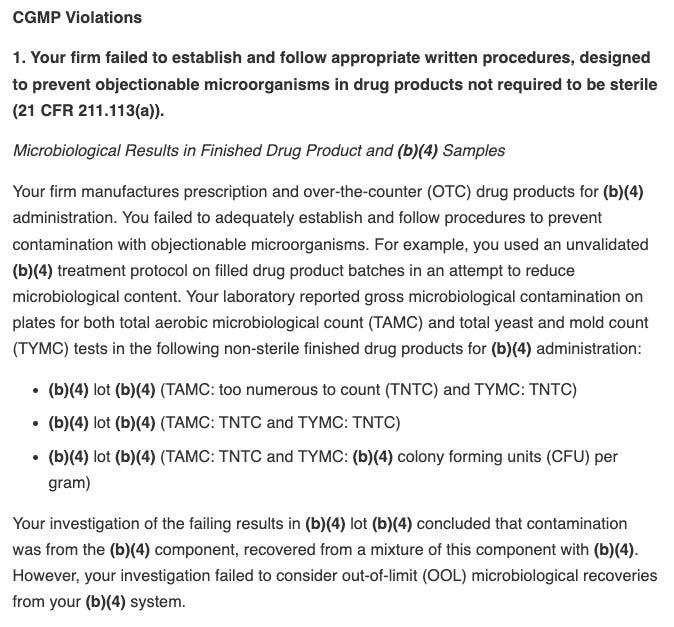
The point here of course, isn’t to single out this company. The finding is one we see all the time. Of the top ten citation categories issued to pharma and biologics firms last year, the two most common were procedures not in writing and the absence of written procedures altogether. Together, those two accounted for just over a third of the citations in that top ten!
What AICA is looking for
AICA reads written procedures against the regulations that apply and marks where the documentation falls short of them. Eric describes the accuracy framework behind that in plain terms. The tool is built to catch information that’s missing from a procedure, information that’s there but incomplete, and language that contradicts something written elsewhere in the system.
A failure to establish an appropriate written procedure sits in the first of those. Run the same documentation through AICA and the procedures would very likely have come back flagged for not covering enough ground to meet what the regulation expects.
Catching it in the report
Eric pulls up AICA’s final report and with the heat map, which shows where gaps concentrate across the written system. For a team preparing for an inspection, that view answers a practical question: which parts of the QMS are most likely to produce a 483 observation or a warning letter, and where should remediation start?
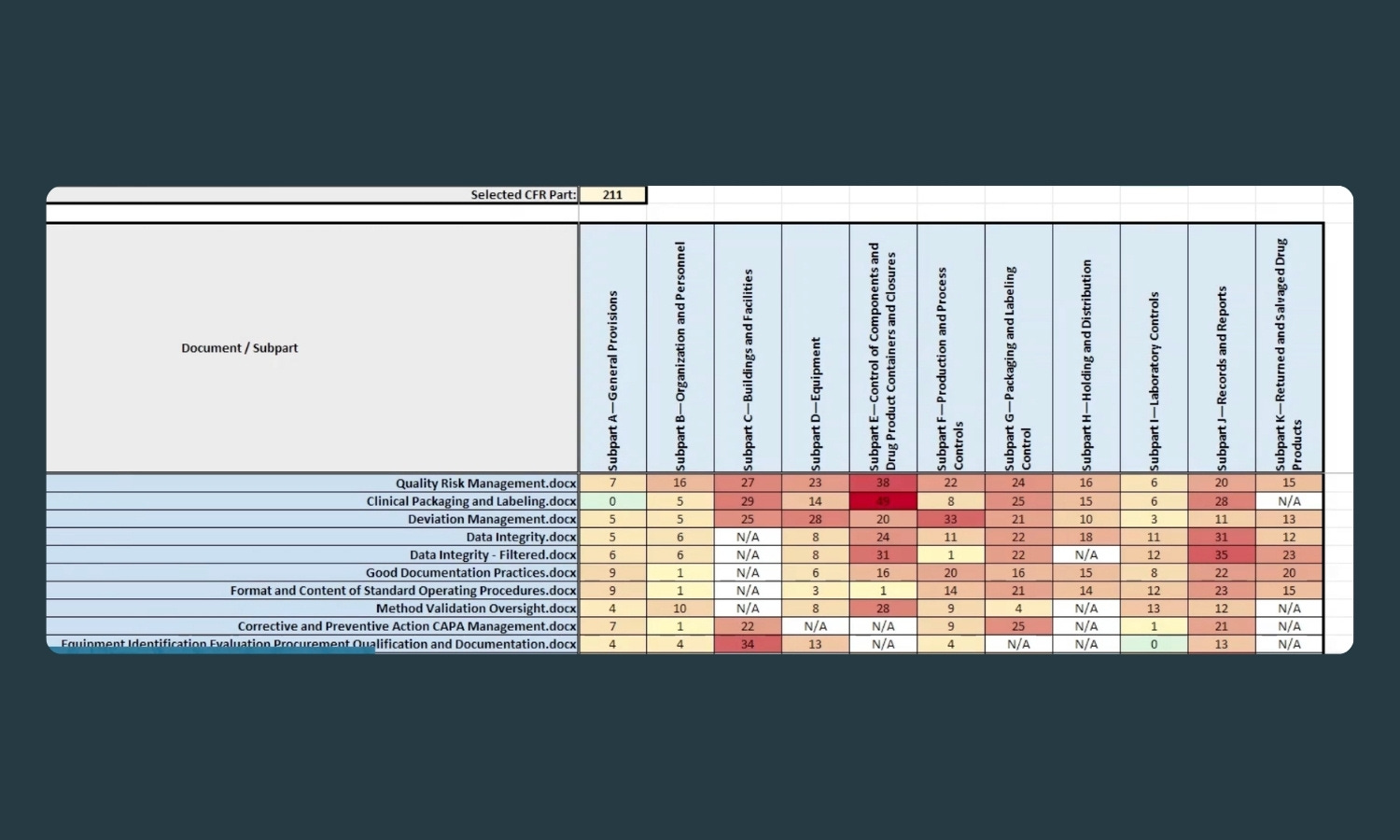
From there, he can quickly filter to the subpart the warning letter cited.
The report aggregates observations by CFR subpart, so the section covering control of microbiological contamination pulls together the documents AICA reviewed, the observations it made, its suggested remediation steps, and the reference material behind each one.
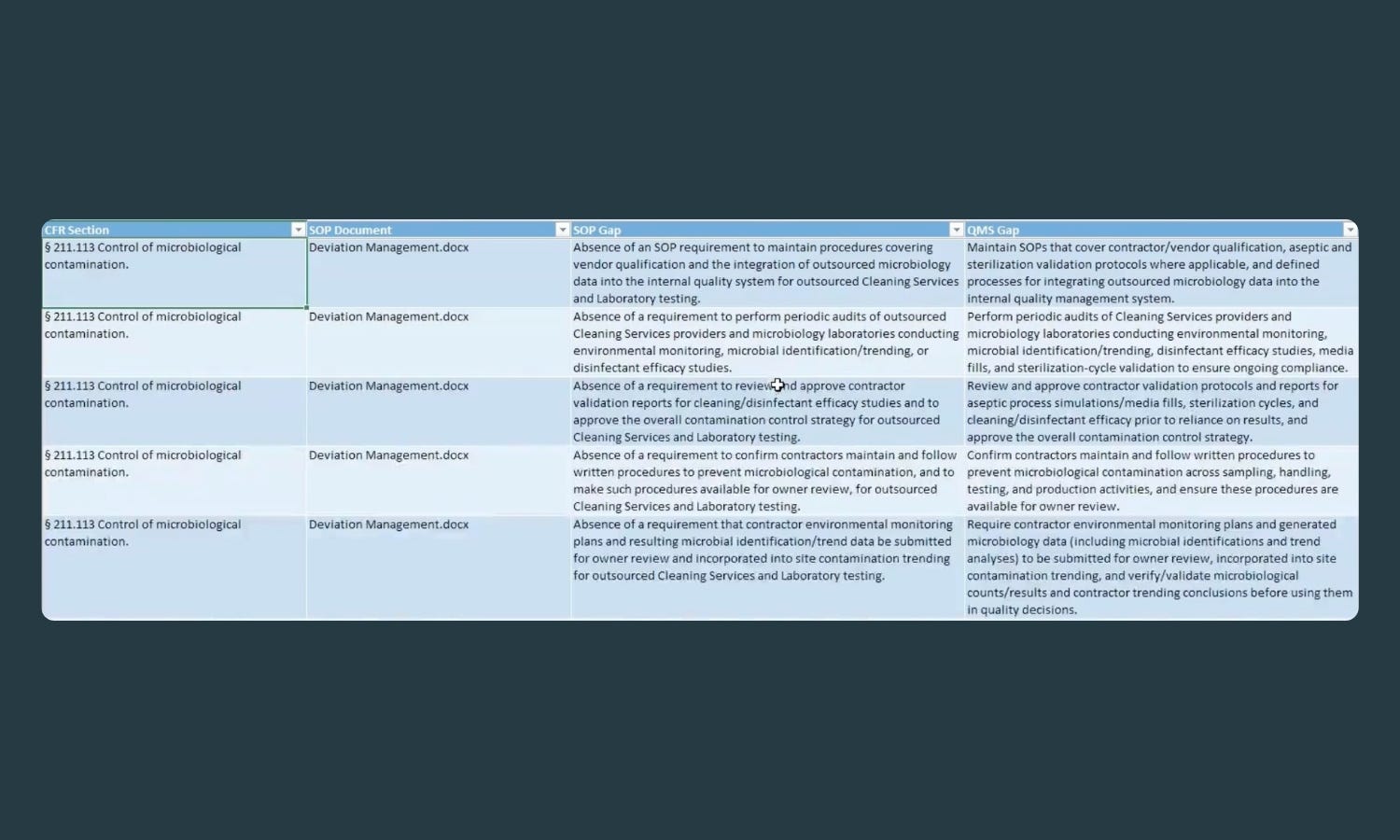
Double-clicking into the observations tab gets to the detail underneath. Which procedures were affected. What gap AICA found in each, and how that gap affects the health of the quality system more broadly.
What it doesn’t do
Eric closes with an important caveat. None of this guarantees a company walks out of an inspection clean, and AICA doesn’t replace auditors or the Quality team. Its output is an internal working document for remediation planning, not something handed to an investigator.
What this tool does is take the tedious part of document review off the team’s plate and give them a head start on problems before FDA sees the same thing.
Have questions or want to get a demo?
Want to see whether AICA fits your team? Visit aica.thefdagroup.com to learn more and get in touch. You can also email Eric directly at eboyd@thefdagroup.com and let him know you’d like to set something up. We’re onboarding teams to the tool right now.


