


AICA is a patent-pending AI-powered compliance auditing tool that analyzes all of your QMS documentation at machine speed. Learn more and get a demo at aica.thefdagroup.com.
We’d like to quickly introduce Eric Boyd, who’s leading our AICA client team, and share his brand new demo of the latest version of the tool.
Since launching AICA earlier this year, we’ve refined its user interface and continued to sharpen its analysis capabilities. If you’re a newer subscriber and this is the first time hearing about the tool, we built it to help Quality teams move beyond limited document sampling and toward a more complete, system-wide view of compliance by marrying the latest in machine learning with a ruleset developed by 15+ regulatory compliance experts.
Instead of manually reviewing one procedure at a time, you can upload your documentation and run an assessment against applicable FDA requirements. AICA then reviews the written system, identifies potential gaps, ties those gaps back to specific regulatory expectations and source documents, and helps generate a structured report that the Quality team can use for follow-up.
As Eric explains in the demo, the tool is designed to support teams by:
Auditing QMS documentation against FDA regulations
Highlighting gaps in procedures and controls
Suggesting steps for remediation
Supporting targeted or broader CFR-based assessments
Maintaining a human subject matter expert in the review loop
Producing transparent, traceable outputs that can be used as a working gap assessment tool
Head over to aica.thefdagroup.com and fill out our demo form to let us know you’re interested in seeing it in person. Or email Eric directly and let him know you’d like to set something up: eboyd@thefdagroup.com.
A simple workflow anyone can run
We’ve simplified AICA’s workflow into just a few steps that even the less tech-minded among us can manage very easily. In the demo, Eric shows AICA’s user interface and how a user can define the audit scope by answering a few short questions.
For example, the user can identify which procedures are performed in-house, which are outsourced, and which are not applicable. From there, the assessment can be configured either broadly across an entire CFR part or more narrowly within a specific subpart.
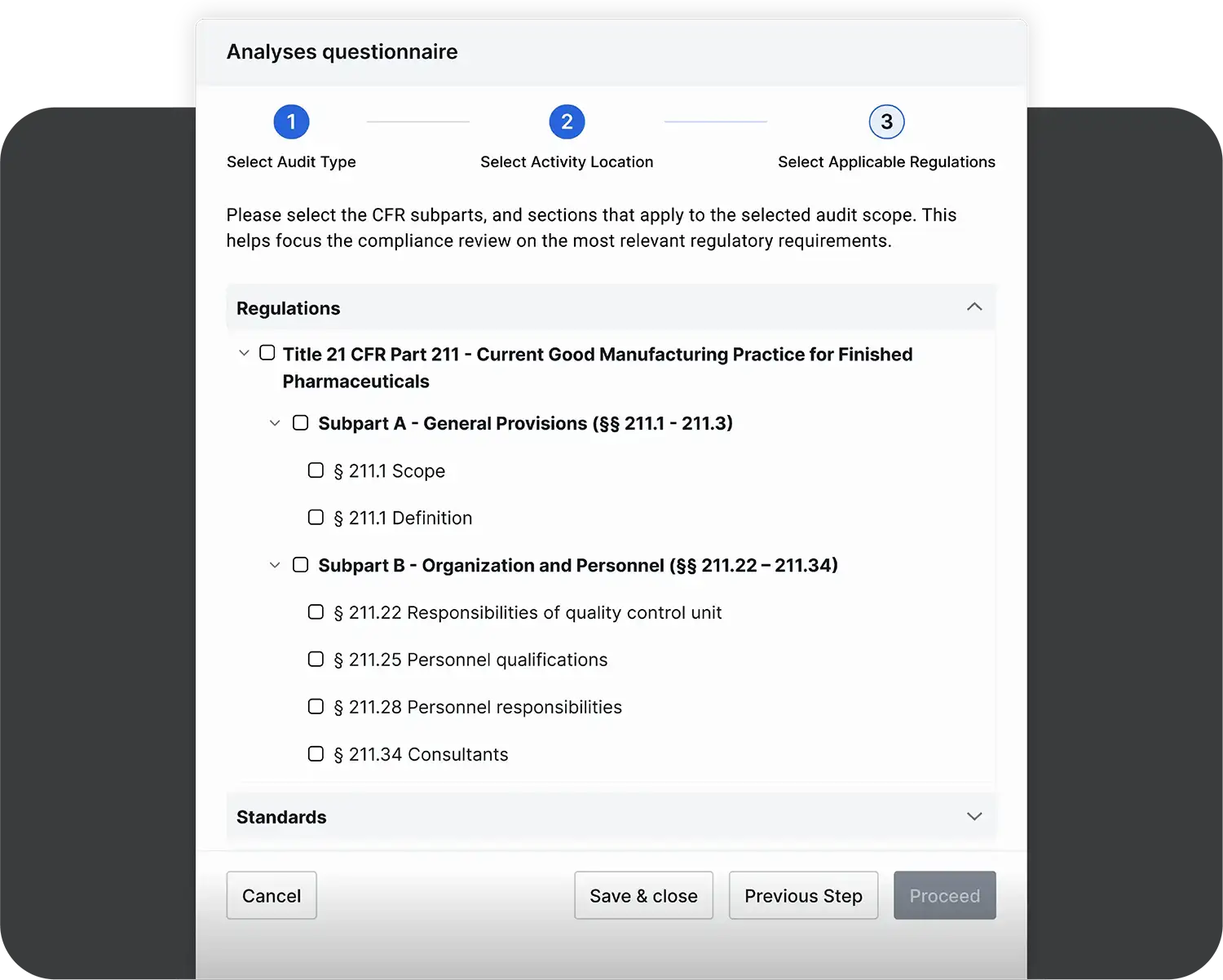
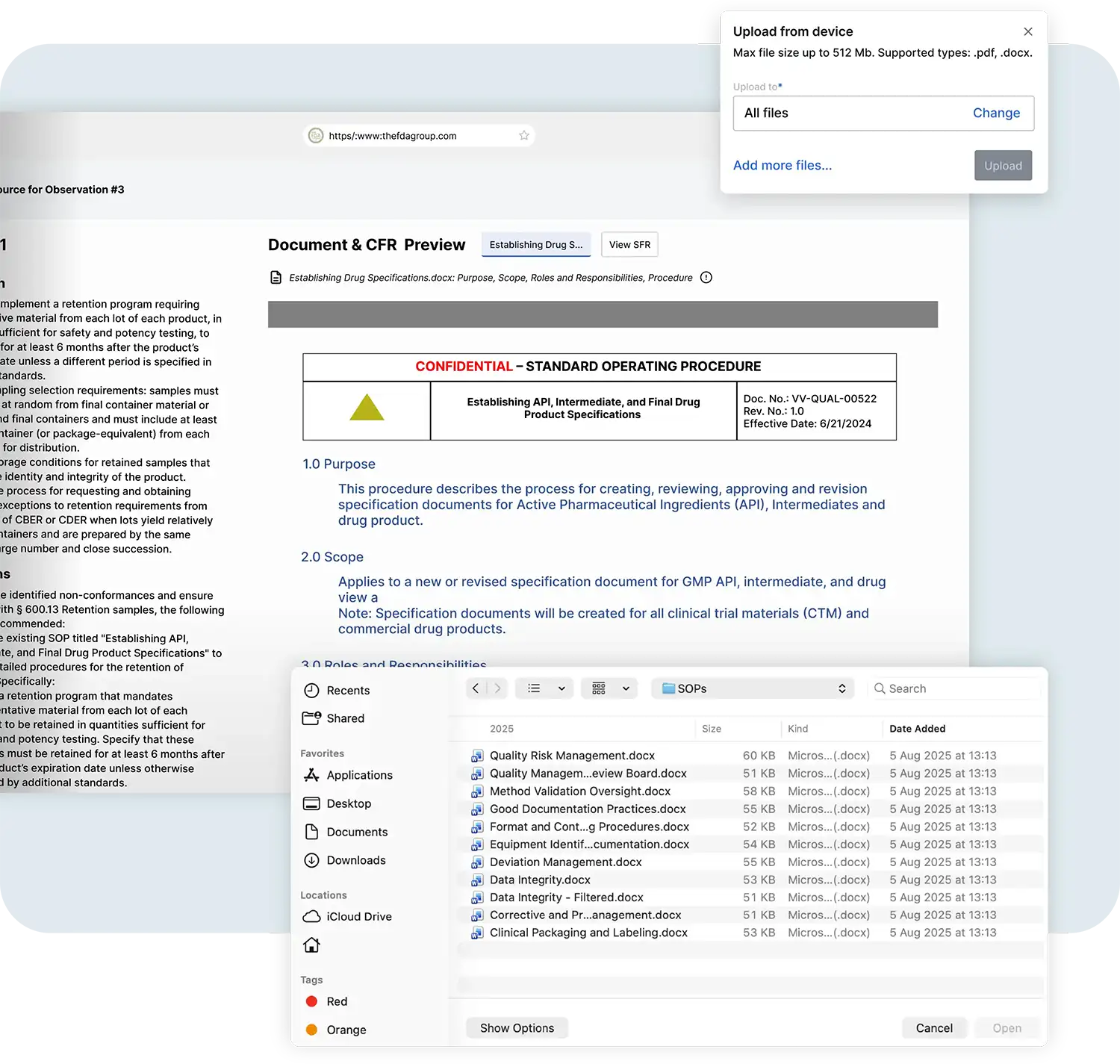
Once the scope is defined, the user uploads the relevant documentation. AICA then begins its initial review and notifies the user when observations are ready.
This is where the system is intended to save you a ton of time. You don’t need to remain in the platform while the initial assessment runs. AICA performs the first-pass analysis and alerts the team when it is time to review the observations.
Keeping the human expert in the loop
One of the most important points in the demo is that AICA is not presented as a replacement for judgment.
Eric shows where a human subject matter expert reviews and validates the observations produced by the tool. Each observation includes an explanation of the gap identified, a suggested remediation step, and references to the relevant documents and CFR sections. The reviewer can approve an observation, reject it, or add additional context. Only after the observations have been reviewed does the user move on to the final report.
That review step is critical. It allows teams to combine AI-enabled speed with human quality oversight, helping make sure that the outputs are not only fast but also meaningful, defensible, and grounded in the realities of the organization’s quality system.
From observations to an actionable report
After the review process, AICA generates a downloadable report.
Eric walks through several key components of the report, including a heat map that shows where the highest concentration of gaps exists within the written system. In the demo, the assessment is being run against 21 CFR Part 211, allowing the team to see where gaps cluster across the relevant subparts.
Users can drill into individual heat map cells to view observation-by-observation detail, including the documents reviewed, the gaps identified, and how those gaps relate to the broader health of the QMS.
This is especially useful for determining whether an issue appears isolated within a single procedure or systemic across the quality system.
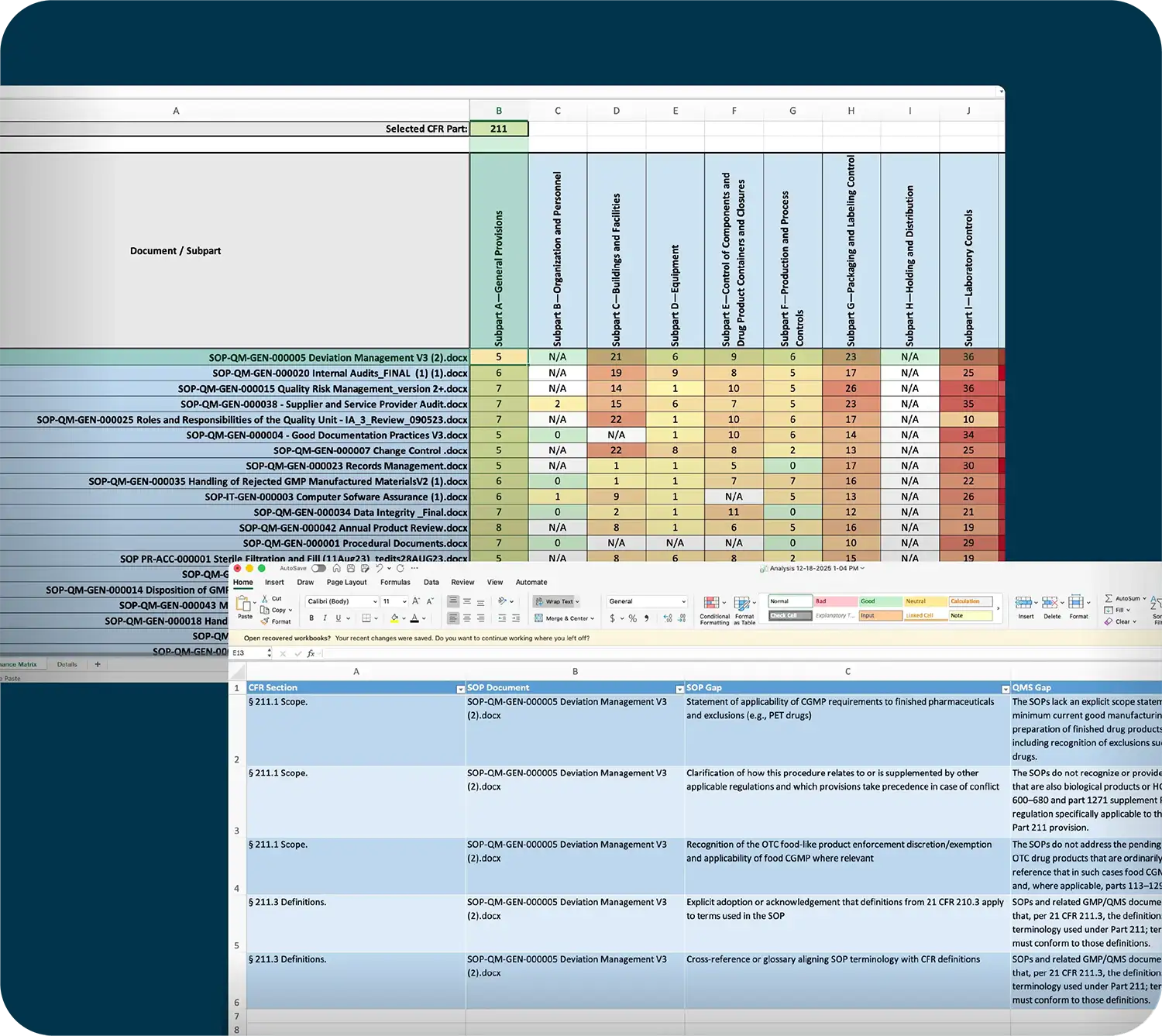
The audit observations tab aggregates the findings by CFR subpart and includes the reviewed documents, observations, remediation suggestions, and reference materials. The result is an output designed around transparency and traceability.
A living gap assessment tool
Because the final output is delivered in Excel, teams can continue working with the report after the initial assessment is complete.
Users can add columns for owners, due dates, status, or other internal tracking needs. That means the report can actually function as a living gap assessment tool that supports remediation planning, accountability, and follow-through.
For Quality teams managing multiple priorities, this is an important distinction and something our early beta users asked for. The value of an audit is not only in identifying gaps, but in turning those findings into practical, trackable action.
Where teams are using AICA now
There are several use cases where organizations are seeing success with AICA, including:
Internal audits
Supplier audits
Pre-inspection preparation
Year-round compliance monitoring
Each of these use cases depends on the same underlying need: a faster, more complete, and more traceable way to evaluate the written quality system against regulatory expectations.
For teams preparing for inspection, strengthening supplier oversight, or trying to maintain a more proactive compliance posture throughout the year, AICA offers a new way to approach document-heavy quality review.
Have questions or want to get a demo?
Want to see whether AICA fits your team? Visit aica.thefdagroup.com to learn more and get in touch. We’re onboarding teams to the tool right now.


